A New Generation of Upcycling
Winnie McCroy
Upcycling is one of the fastest-growing trends in fashion, projected by industry analysts to exceed $11 billion in sales by 2029. We spoke to four FIT alumni and faculty leading the shift away from disposable fashion and toward the sustainable reinvention of existing garments. More than just a triumph of circular fashion, their work provides bespoke treasures at every price point.
Coach

When luxury leather goods brand Coach says its products are made to last, they mean it: Their Coach (Re)Loved program is devoted to refurbishing, reimagining, reusing, and recycling preloved and damaged Coach products, so they don’t become waste. The program has been so successful that in 2024, the (Re)Loved Workshop earned Gold-Level TRUE Zero Waste certification, meaning that over 90% of the workshop’s materials are diverted from landfills and repurposed by the workshop’s artisans
In Coach’s North Bergen, New Jersey, workshop, Andrew Kaefer, Footwear and Accessories Design ’25, and other apprentices upcycle extra inventory, bags returned for store credit, and the occasional vintage item. Their work is divided into four (Re)Loved categories:
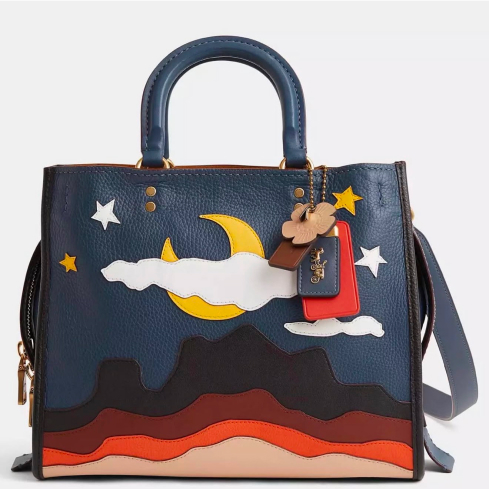
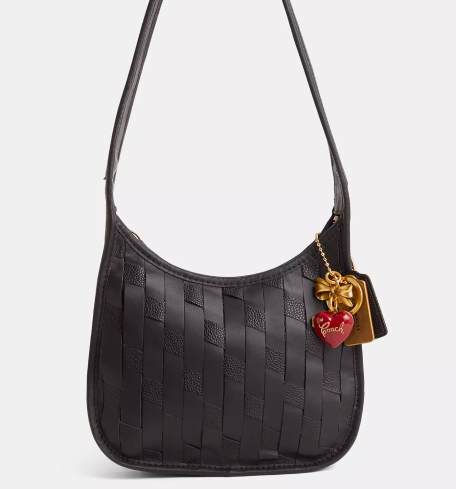
Upcrafted bags—otherwise good-quality items damaged during embossing, or needing a new flap woven or small flaw covered with a custom patch or pin. “These are almost ready to sell, but we add new life,” says Kaefer.
Vintage bags, some sourced from eBay and more than 50 years old. Apprentices recondition and repaint them, then add vintage hardware.
About half of Coach upcycles are Restored: “returned bags or extra inventory that has nothing wrong with it; we just clean it up and resell it at a discount.” Coach moves about 1,300 of these monthly.
The Remade category is the smallest, but Kaefer’s favorite. It’s the most circular part of Coach upcycling, in which apprentices cut up damaged bags to create small leather goods like wallets, trays, puzzles, tiny ottomans, and chess sets. These end up at Coach’s flagship jewel-box Fifth Avenue store or Hudson Yards shop; five upcycled bags were recently sent to a store opening in Kyoto.
(Re)Loved items are highly sought after. Kaefer notes, “People go crazy when we re-release merchandise not available on the website for 20 years. We just did bags with chains and charms created from old pins, and they sold out in a few hours.” Coach also creates different upcycled “story” items monthly, like Halloween bags or New York City Subway motif bags, painted by hand in a 15-hour process. “People who appreciate craftsmanship are purchasing them,” says Kaefer.
Cobbler Bushwick Co.
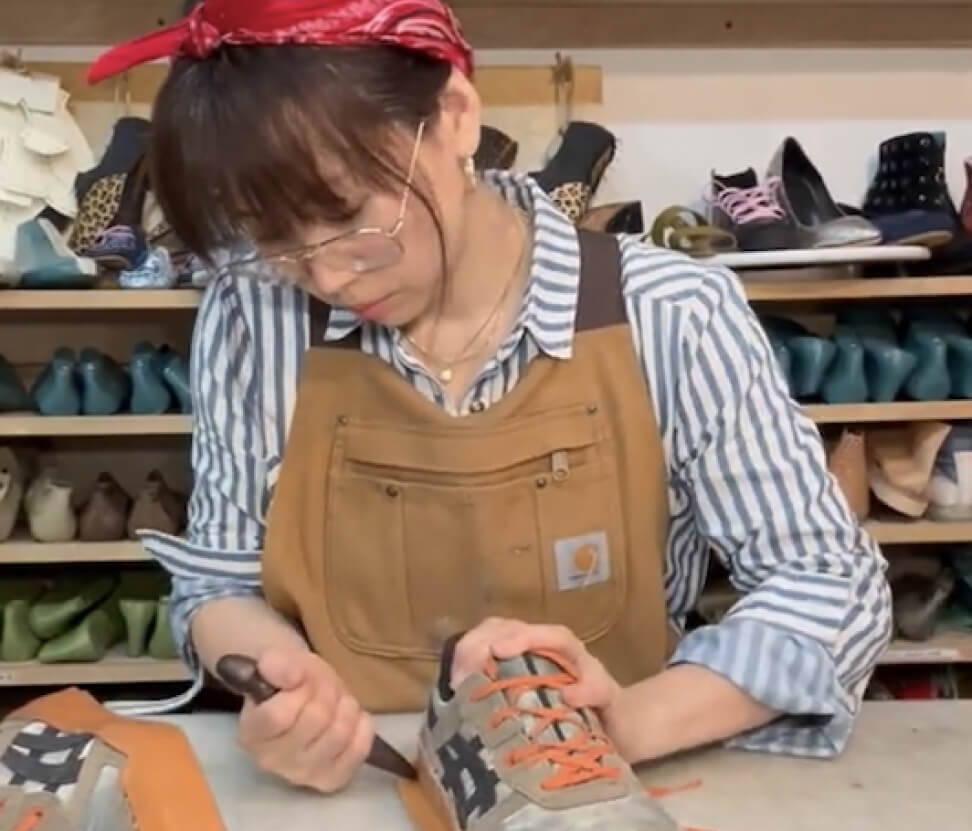
Tucked away in Cobbler Bushwick Co., a bustling storefront that’s half shoe store/half coffee shop, Sungwoo Roh, Accessories Design ’05, builds durable, stylish, sustainable shoes. After 15 years toiling for big designers, Roh says her “body and spirit were resisting.” So she followed her heart and the emerging sustainability trend, and by 2021, she’d set up shop to save old sneakers from landfills, upcycling them for a second life on the street. Eschewing “cheaper and cheaper” production values, Roh instead sourced high-quality used leather footwear and, along with her talented craftsman brother, gave them a second life by adding new vegetable-tanned leather and Vibram soles. The resulting one-of-a-kind shoes are very popular—especially among sneakerheads, who don’t hesitate to pay hundreds of dollars for rare releases and are happy to dole out the same for a custom upcycle of their beloved kicks.

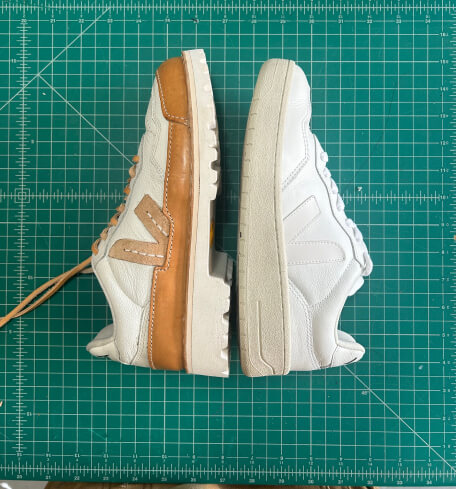
She collaborates with companies like Veja, Adidas, Cueva, and New Balance to upcycle shoes from their storeroom to resell. It’s one more opportunity to bring awareness to sustainability and craftsmanship. In her effort to promote upcycling more broadly, Roh leads three-day workshops teaching participants how to cobble new shoes out of old.
E-commerce comprises 80% of Roh’s business, but thanks to a collaboration with a former colleague turned business partner, Cobbler Bushwick has become a vibrant spot to grab a coffee and pastry as well. Sometimes Roh even serves as a barista; she loves connecting with locals. Cobbler Bushwick is not a repair shop; Roh refers folks seeking repairs to nearby cobblers, but will occasionally do a freebie for a local senior.
“I’m happy, even though I work more than before,” says Roh. “Sharing my work with individuals and meeting people is very fulfilling.”
Naia

In September, Miloni Sheth, Advertising and Marketing Communications AAS ’15, launched Naia, an online redesign platform that connects individuals with designers to upcycle their old clothing. Sheth recruited the designers, each of whom has a different specialty, on Instagram. She designed a visual interface for them, manages orders, launches drops, and handles shipping and logistics.
Studies show that people wear 20% of their clothes 80% of the time. This fact prompted Sheth to try and shift consumption. Rather than getting that dopamine hit from shopping, consumers can get excited about working with one of Naia’s 16 designers to co-create a new garment from something they already have. “It’s a mindset shift for people to see their existing clothes as something new,” she says.
But it’s not a new way of doing things for Sheth. Growing up in India, she spent a lot of time in her designer mother’s workshop, watching the artisans be resourceful with whatever scraps of fabric they could get. Sheth redesigns her own clothes; she even upcycled her own wedding dress from her sister’s gown.
“But these days, upcycling is a choice, and not about scarcity,” she says. “Consumers and Gen Z want to wear clothes that reflect their values” of individuality, authenticity, and self-expression.


Customers can dip a toe into the Naia experience via smaller, more affordable services, like patching or dyeing. “The beauty of upcycling is that sometimes you don’t need a dramatic project, just a mend, a dye, or a hand-painted patch,” which she says, “instantly elevates a garment, not just by covering damage but by adding personality and character.”
Sheth’s circular redesign platform allows customers to upload photos of their garments, then gives tips to move from inspiration to action. It’s even possible to take a photo from a website, paste the URL into Naia, and have a designer reverse-engineer the garment, using pieces from the customer’s own closet.
Sheth says their clientele are people who “value story and craftsmanship over trends,” explaining that Gen Z customers seem obsessed with dyes and patches, and clients in their mid-30s and 40s tend to redesign sentimentally valued items, like grandma’s dress or dad’s hunting jacket.
Naia designers also create and sell already upcycled items that showcase their style and spark customers’ creativity. Sheth says she hopes to expand this part of the business, even doing it at scale with designer brands, much like the “fun collection [of $7,500 dresses] Miu Miu did at a very high price point—that was a good example of how brands can engage.”
“If you need something new, instead of buying from some website, look in your closet and send us something to redesign,” says Sheth. “Focus on the three R’s: repair, refresh, reinvent—and apply them to anything. You can look good, feel good, and do good for the planet at the same time.”
Clo3D

Upcycling is gaining momentum as a major category of fashion, and Andrea Diodati, assistant professor of Fashion Design, helps put it within her students’ reach by teaching digital upcycling using fashion design software called Clo3D.
“It’s exactly like real life, but you can iterate many different designs before you cut into anything,” she says. Designing via Clo3D offers the ability to customize an item and show your customer how it will turn out before they commit, because “with upcycling, you have only one chance; you can’t reorder an old garment.”


The software digitally simulates the physics of each textile, accurately reproducing the drape. Designers can create a virtual version of an existing item and refine it prior to getting out the shears. The software is available at tiered price points, including a student rate of $25 a month.
Clo3D is ideal for made-to-order upcycles since, Diodati says, “there could be many interpretations of a sketch, but a 3D model is going to be very accurate in depiction, and there’s much less room for error and misunderstandings.”
UPCYCLING 101
Reimagining and repurposing garments isn’t just for the pros. Here are some tips from our experts for DIY remaking at home.
Anything can become a bag. Coach upcycler Andrew Kaefer ’25 challenges folks to “go outside the box of what you think you can upcycle.” He recalls a FIT sustainability project in which he turned old overalls into a shoulder bag, embroidering the fabric and using the straps as its handle. “You’d be surprised how wide jean legs can be; you can make them into a big bag,” he says, adding, “Any tote bag is basically just a box sewn on three sides.”
Hide stains with homemade dye. Don’t want to throw out quality leather shoes over a few stains? Sungwoo Roh of Cobbler Bushwick says you can dye them yourself—using coffee! Brush them with a shot of espresso and let it dry overnight. Make it darker with multiple coats, or soak shoes for a deep dye.
Lean into the art. “Look at your clothes differently, as fabrics or a canvas, to see the possibilities,” says Miloni Sheth of Naia. Add similar but mismatched buttons to elevate a dress shirt. Or reinforce a seam with a contrasting thread. She also suggests upcycling overlooked pieces like blankets and quilts, “which are amazing because of the images and patterns on them.”
Look for flat fabrics. Assistant Professor Andrea Diodati says, “My favorite things to upcycle are tablecloths and napkins, which you can make into an easy kimono or summer top. I especially like upcycling crocheted items.” —W.M.