By Alexander Joseph
Love or hate artificial intelligence, it’s here. Our creative processes, the way we do business, and even education itself are all being upended in various ways. But there’s that T in FIT, and our community is embracing this new technology through student contests, coursework, and intellectual queries. Despite the rumors, it’s even providing jobs to alumni. Are you using AI in your career? Let us know at [email protected].
PROMPTS AND CIRCUMSTANCE
Students push their creative limits by designing with AI
Planning a promotional campaign? Just log in to ChatGPT and give it your prompt, right? Actually, it’s not so simple.
In the fall, Christie Shin and C.J. Yeh, professors of Advertising and Digital Design, organized a contest on campus. The brief: Use artificial intelligence to create a social media post promoting a holiday of your choice. Open to all current students, the competition also served as the midterm for Shin and Yeh’s class, AI-Assisted Design. “We teach students to use AI ethically,” Yeh says. “AI is an assistant, not a replacement” of human beings.
“These tools are now standard across the design fields our students will enter once they graduate,” Shin says. “We’re preparing them for work.”
Industry judges chose winners based on the criteria of concept, original contributions, and design and storytelling. These two winning student projects demonstrate how this new technology informs the creative process.
THE RED IMPOSTER
In this one-minute cartoon by Yuqing Liu, Art Market Studies MA, a bemused Santa Claus finds himself in a room full of monsters. (He arrived on Halloween by mistake.) A veteran of labor-heavy virtual 3D modeling software, Liu says the newer tools saved her time, but execution still took three full days. “AI helped me realize my vision, but it’s still surprisingly labor heavy.”


She used image generator Midjourney to create the characters, then color-corrected them in PhotoShop. Next, she brought them into Flora, a tool that streamlines AI project workflows; the platform helped Liu maintain a consistent plaster-and-acrylic aesthetic. Her prompt for the above image:
“A whimsical, toy-like Santa Claus figure carrying a large, polka-dotted green sack over his shoulder. Nebulous, dreamlike quality, like a miniature set. Big pink moon in the background. Sky in dark blue. The ground beneath Santa is textured and uneven, suggesting a fantastical, otherworldly landscape. Everything in acrylic or plaster textures to create a surrealist feeling.”

BLOOM YOUR WAY
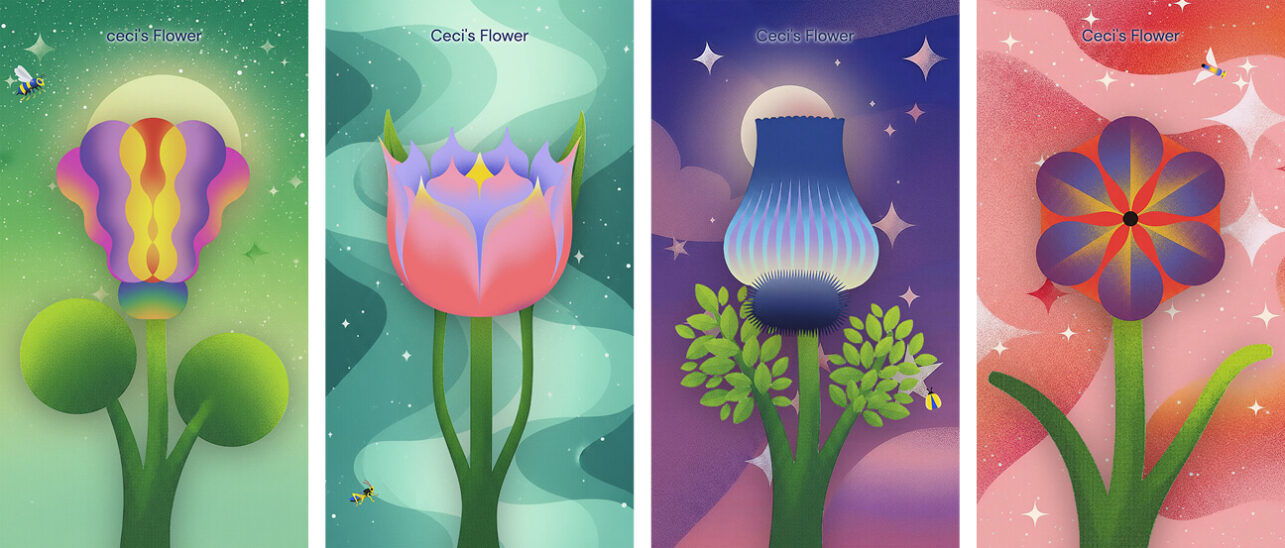
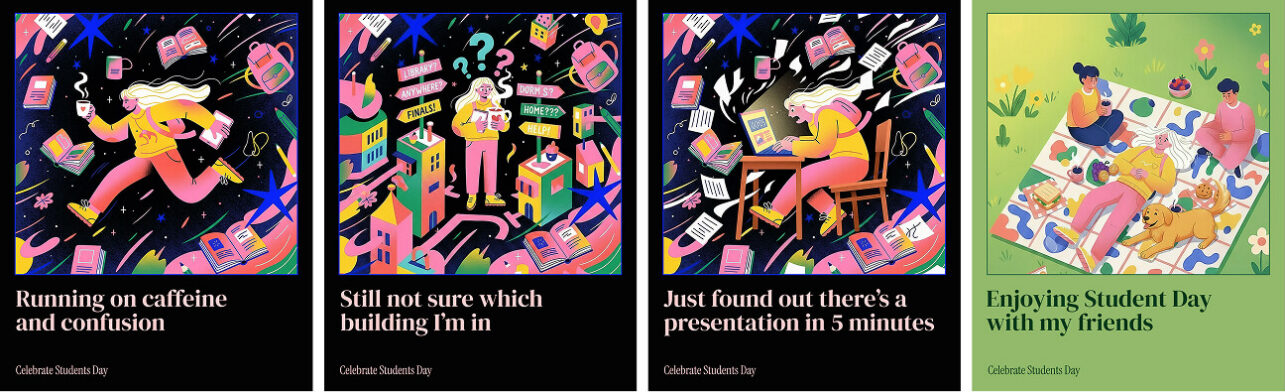
Originally from Argentina, Cecilia Garcia Pizales, Advertising and Digital Design, chose Student’s Day, a holiday particular to her home country, when colleges are closed to honor a key figure in the country’s education system. Pizales’ campaign encourages the audience to “celebrate what makes you…you.” She used six different AI programs plus Premiere Pro and Photoshop for the project. “The concept is mine,” she says. “I’m not letting AI come up with it. I see myself as the creative director.”
AI MEANS BUSINESS
Funded by SUNY, faculty create an AI-powered retail analysis tool
In 2024, when Shelley Kohan, professor of Fashion Business Management, was preparing a course about retail business, she ran into a snag. She wanted students to be able to compare the financials from companies that submit their 10-K’s (aka annual reports) to the Securities and Exchange Commission (SEC). The problem: There is no standardized language for how companies report profits and losses (P&L). “Every company can use their own terminology when reporting to the SEC,” says Calvin Williamson, professor of Mathematics. “What’s ‘total revenue’ to one company is like ‘net sales’ to someone else.”
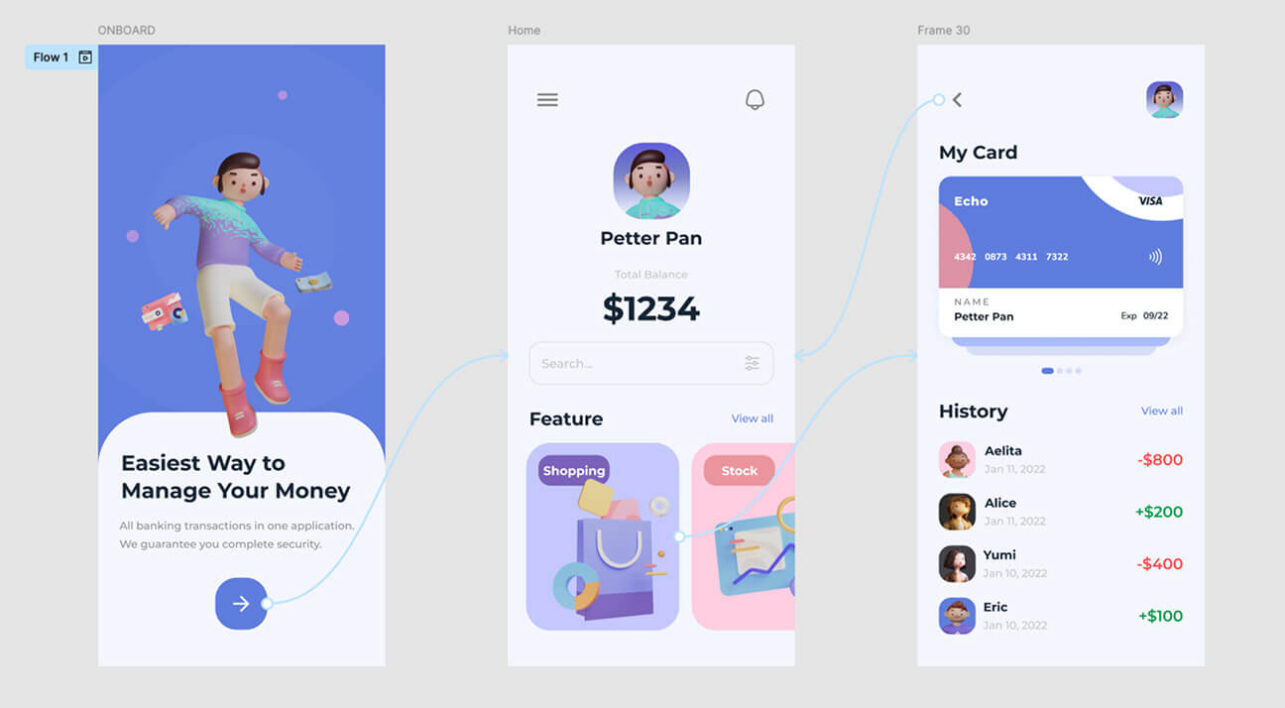
Accounting and bookkeeping firms can standardize P&L nomenclature, often for prohibitive fees. But Williamson realized that an AI known as an LLM, or Large Language Model, could do this job more easily. With the help of a SUNY innovation grant, he and Kohan built a GitHub-hosted site to provide the specific comparisons Kohan needed, using the LLMs Gemini, DeepSeek, and ChatGPT. The site allows students to contrast and analyze data from 54 companies using 10-K’s from the years 2018–2024.
The site is an OER, or Open Educational Resource, meaning it can be used by anyone, for free. The project team also included Ajoy Sarkar, assistant chair of Textile Development and Marketing, and two faculty members from SUNY Oneonta.
In 2025, the team received a second SUNY grant, with the goal of using AI to make the site more interactive. Working with five students who received stipends, the team is employing “agentic” AI (which can act independently with minimal human oversight) this time.
Among the achievements of the revised project: students can now easily translate P&L data from different countries, because AI agents can translate currency. In the past, each company’s 10-K had to be downloaded and its data entered manually. With the update, AI agents can peruse, select, and upload that data from PDFs themselves.
It’s unusual to find FIT students who write software code, Williamson says. But AI allows students to “vibe code”: They can tell the AI what they want a program to do, and the bot will code it for them, then revise it based on prompts. “Traditionally, when building a website, a client asks a designer to create the visual design, and then a web developer writes the code to make everything work,” says Souyen Young, a Fashion Business Management student who’s working on the project. “Now, with chatbots and LLMs, I can do both parts myself.”
PUTTING AI TO WORK
This alum creates AI solutions for IBM, and uses the technology in her own work
As a product designer in IBM’s Chief Information Office, Kathleen O’Brien helps create AI-powered solutions for IBMers through the company’s “Client Zero” initiative. IBM then uses these internal success stories to show clients what’s possible with AI.

O’Brien designs digital products that boost productivity across IT support, procurement, and other areas. “I’ve worked on AskIT, a chatbot that handles up to 80 percent of IBMers’ requests for IT support—from password resets to hardware and software access requests,” she says.
Typically the sole designer on cross-departmental teams, O’Brien increasingly relies on AI throughout her own work—from analyzing user interviews to generating realistic content for design prototypes. “Rather than replacing creativity, AI amplifies it,” she explains. “With AI handling repetitive tasks, I can spend more time with users and deepen my technical expertise.”
CAN AI BE USED TO MAKE ART?
By Assistant Professor Lucy Collins Payne, who teaches philosophy in the Department of Social Sciences
What is art? With the rise of AI-generated content, we face this centuries-old question with new urgency. On my recent sabbatical, I developed a course in technology and ethics to explore how AI relates to human flourishing. Examining the central question of what differentiates art from non-art can not only help us understand whether or not this new AI generated media counts as art, but also what it does (or does not) add to human life.
Twentieth-century artists repeatedly challenged assumptions about art: Must artists execute their own visions by hand? Does craft matter, or only the final result?
When someone can produce an image, story, or movie from a text prompt, longstanding assumptions are tested: Must artists execute their own visions by hand? Does craft matter, or only the final result? Is human touch essential to art’s purpose? By revisiting several of these provocations, using concepts from an esoteric branch of philosophy called aesthetics, we can contextualize the new technology and its role in art-making and viewing. As for whether these objects are art, I leave the final judgment to you.
Fountain
Marcel Duchamp, signed by artist as “R. Mutt,” 1917, replicated 1964, repurposed urinal. Tate Modern.

Marcel Duchamp’s Fountain, an ordinary urinal signed with the pseudonym “R. Mutt,” provoked its audience with questions about the definition of art.
Rejecting the tradition of crafting beautiful works, the artist merely signed this “ready-made” object and submitted it for exhibition. A forerunner of the “conceptual turn” in art beginning in the mid 20th century, Fountain showed that art can be an idea, transcending physical or visual characteristics.
Fountain suggests that what we accept as art depends more on whether it’s accessioned into an institution than the work’s intrinsic properties. A facsimile of Duchamp’s piece is currently displayed at the Tate Modern. (The original was lost.)
Convergence
Jackson Pollock, 1952, oil on canvas, 93.5 by 155 inches.
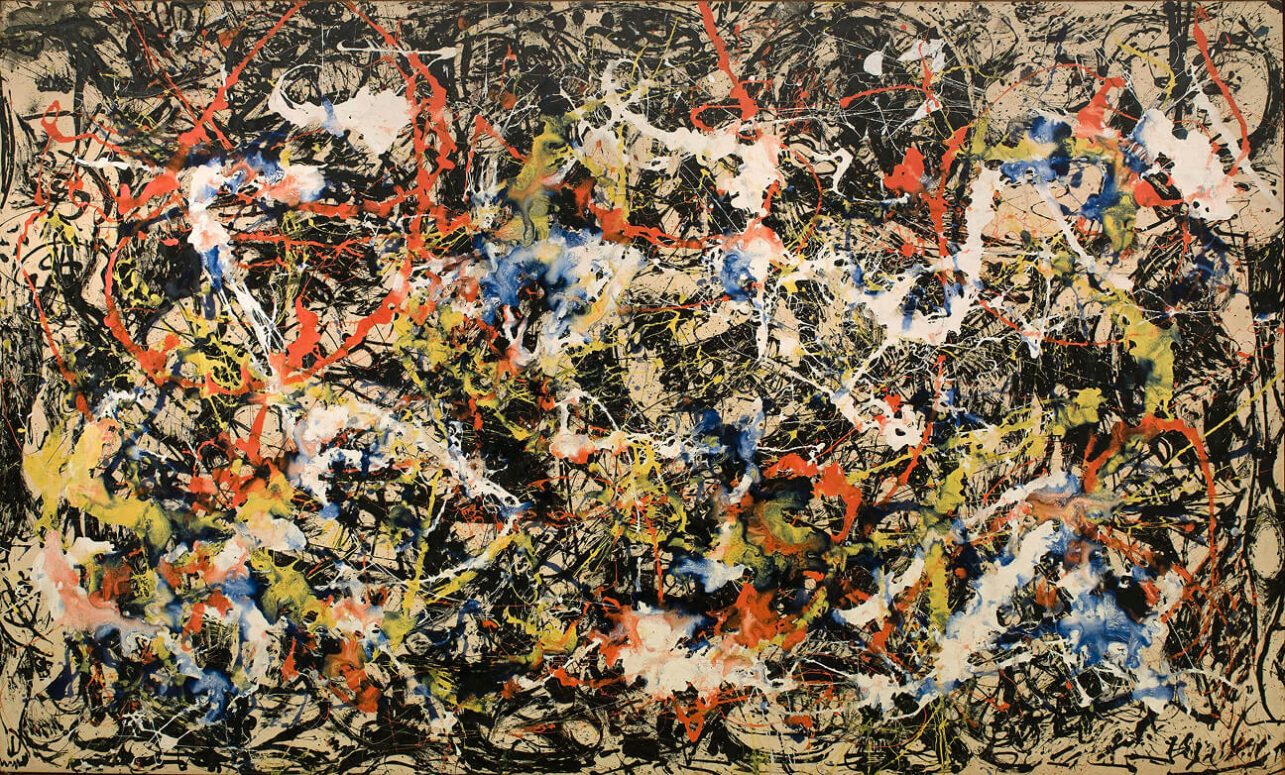
Abstract Expressionism, a movement that began in the 1940s, required theoretical context to be understood; the painting alone wasn’t enough. Some saw this as a turning point where ideas mattered more than craft. Under this lens, any object or form of media that prompts philosophical inquiry—even an AI project—is indeed a work of art. The chaotic drips in Jackson Pollock’s work appear to defy all intention, and Pollock embraced an element of chance in creating his canvases. In a similar way, the AI artist of today submits a prompt, and relinquishes some control over what is produced.
Brillo Boxes (Soap Pads)
Andy Warhol, 1964, polyvinyl acetate and silkscreen ink on wood, 17 1/8 inches by 17 inches by 14 inches. Gift of Doris and Donald Fisher/MoMA.

Andy Warhol’s Brillo Box sculptures pushed Duchamp’s provocation further by introducing what philosophers call the “indiscernibility problem”: If two objects look identical—Warhol’s replicas and the actual commercial boxes on supermarket shelves—what makes one art and the other not? Where Duchamp selected an existing object and recontextualized it, Warhol fabricated replicas of mass-produced goods. Both artists demonstrated that institutional framing—the gallery, the museum—can transform an object’s status. But Warhol’s appropriation of recognizable consumer imagery pointed toward a practice central to much contemporary art and AI-generated work: transforming existing visual material through recontextualization.
Unsupervised — Machine Hallucinations
Refi k Anadol, AI-generated images on a screen, 2022. MoMA.
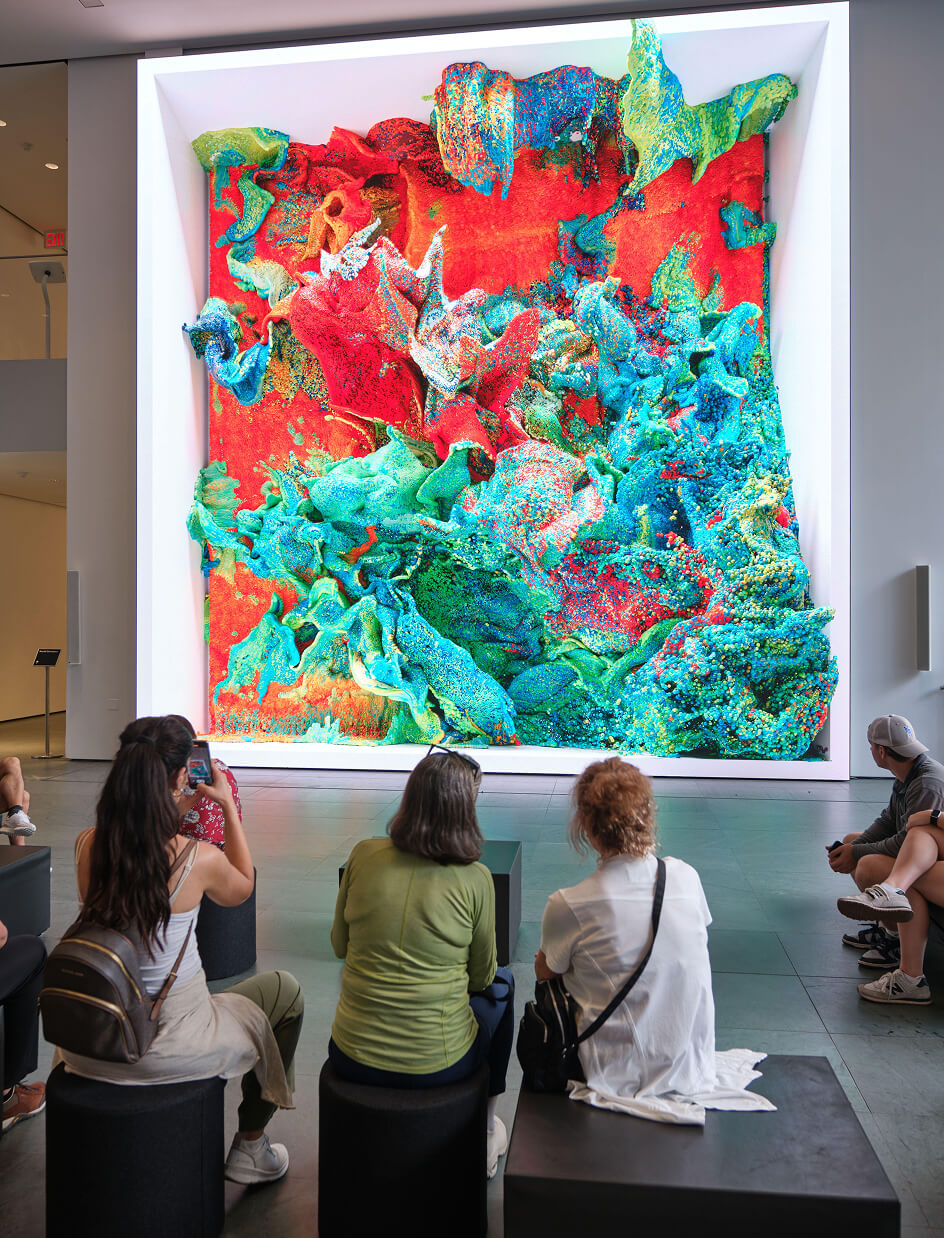
If we accept Warhol and Duchamp’s assertion that art is whatever curators put in a museum or gallery, then our question about AI is answered. In 2022, the Museum of Modern Art exhibited Refik Anadol’s AI-generated work Unsupervised. Anadol used a program to scan all publicly available images of works owned by MoMA and “remix” them into a constantly mutating swirl. Not all viewers were pleased; critic Jerry Saltz referred to it as a “half-million dollar screensaver.” Still, the piece leads to fascinating questions about what counts as craft, and whether or how originality matters.
AI generated art may be accepted intellectually as art, but many questions that remain: What is the role of art in human life, and can art produced by an AI prompt fulfill that role? If a disembodied machine generates our art, can it produce the emotional catharsis Aristotle claimed was central to the role of art? Or can it evoke the empathetic response that Tolstoy said was necessary for art? Even if AI art meets our definitional criteria, is it ultimately good art? In time we will see, but I have many doubts.
Payne teaches courses in philosophy and ethics at FIT.
Hero image by: Cecilia Garcia Pizales, created in AI