People
Places
Events
Clubs
Courses
Resources
Accomplishments
Memories
And Traditions
that couldn’t exist anywhere else
People
Places
Events
Clubs
Courses
Resources
Accomplishments
Memories
And Traditions
that couldn’t exist anywhere else
Anyone who has walked these halls, taken courses here or taught them, or worked to keep the college running knows that FIT defies categorization. We are part of the State University of New York (SUNY) and also globally renowned, with students hailing from more than 65 countries. Yes, we teach fashion design—but also business and science and film and much, much more. Some consider us a commuter school, yet we house 2,300 students in our four residence halls. We have a world-class museum plus thousands of square feet of other gallery space for rotating exhibitions. Our students might take seven or eight classes while holding down an internship and a job. We have a robust athletics program! We are a leader in sustainability education! We offer more than 40 minors!
Maybe we need to stop trying to define FIT—an impossible task!—and celebrate the myriad delights of all kinds that create a college experience unlike any other in the world. So here are 50 things about FIT that make us smile. Our list is hardly comprehensive. Tell us what’s “so FIT” to you at [email protected].
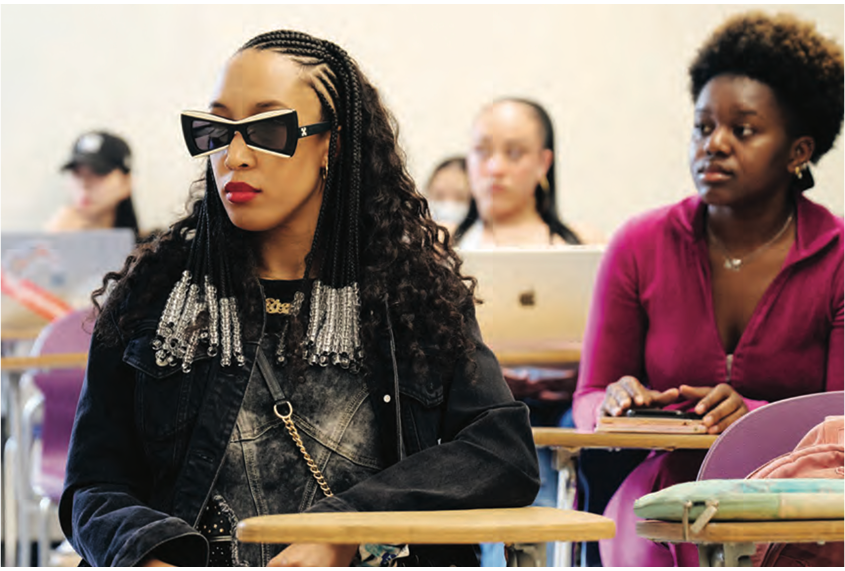
Though FIT’s School of Liberal Arts and Sciences offers just two majors—(1) Art History and Museum Professions and (2) Film and Media—it’s FIT’s secret weapon, deepening curricula across the college and helping deliver a well-rounded education.
And lots of these courses are fun! Our world-class faculty designs unique and engaging offerings powered by their own cutting-edge research.
Here are 10 of our favorites.
Michael Hyde, professor, English and Communication Studies
Jerilyn Zulli, adjunct associate professor, English and Communication Studies
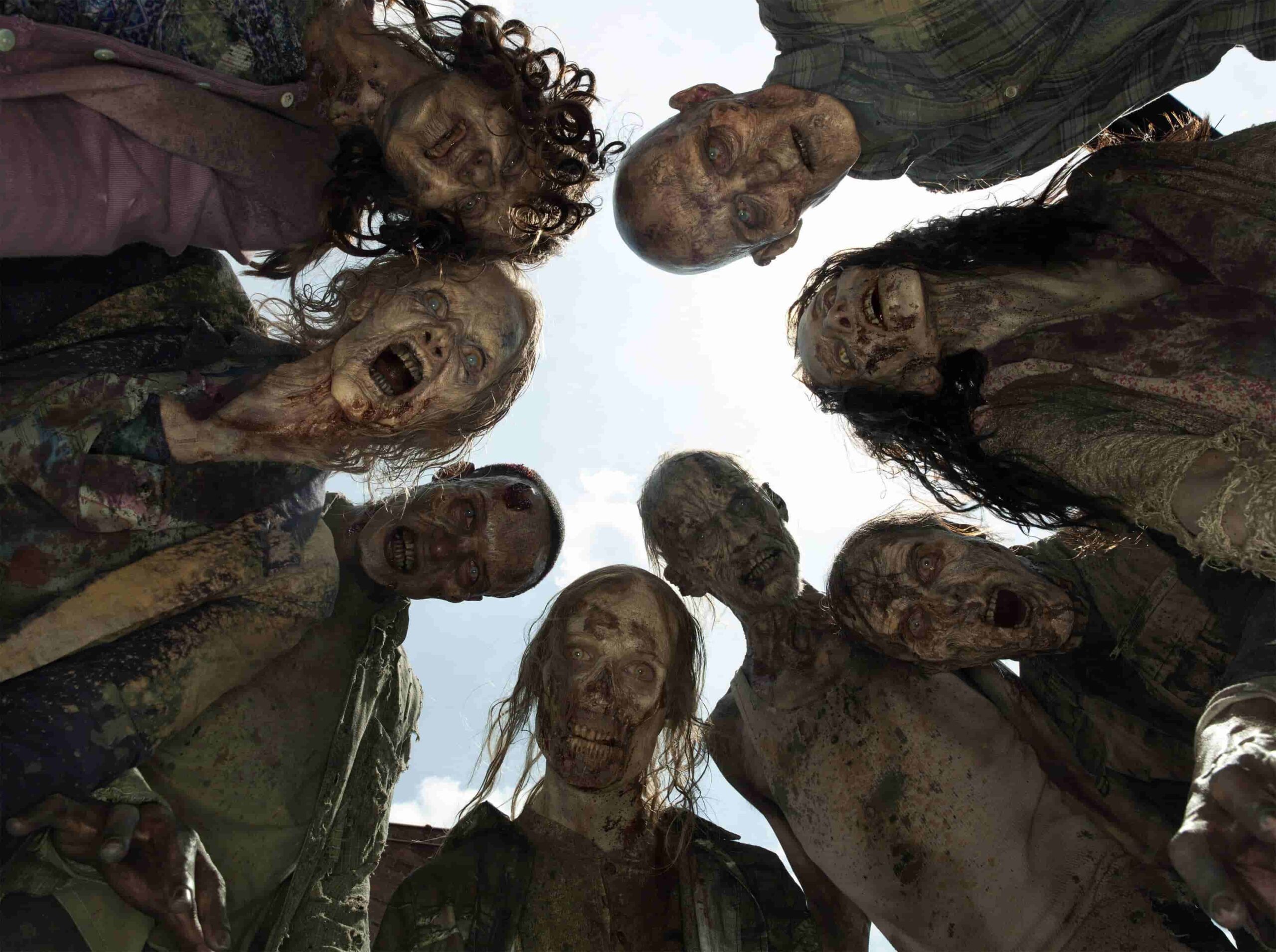
Creepy castles, haunted houses, and maniacal monsters set the stage for an exploration of why we’re drawn to darkness, mystery, and the thrill of fear. Students trace this rich literary tradition by analyzing novels such as The Castle of Otranto and Frankenstein. Then they research folklore and craft their own horror story or visual piece.
Karen Pearson, chair, Science and Math
Students investigate forensic processes—such as how a DNA test works and how to analyze color scientifically—learning to apply these skills to their own fields of study. The course highlights the vital role science plays across creative industries, from creating cutting-edge cosmetics and eco-friendly packaging to enhancing digital photography.
Rebecca Bauman, professor, Modern Languages and Cultures
This course traces the evolution of mafia cinema, from The Godfather to modern-day crime sagas, exploring the power, betrayal, and family drama that define the mafia on screen. Students discover how these films both glamorize and critique organized crime, and how they reveal truths about culture, morality, and the American dream.
Dahlia Schweitzer, professor, Film, Media, and Performing Arts
A virus decimates Earth … will humanity survive? With Covid in our not-so-distant past, fascination with contagion narratives is at an all-time high. Students dissect viral apocalypse stories in film and media from the ’90s to the present—including Contagion, Hades Factor, and World War Z—tracing how these narratives evolve, why they endure, and what they reveal about how we confront danger, disaster, and hope.
Andrew Weinstein, professor, History of Art
How do current events shape our understanding of the Holocaust? This Honors course traces Holocaust memory from postwar footage to today’s debates, examining how history is remembered and represented. Through visual media, and interdisciplinary art, students explore how artists confront and represent the Holocaust, engaging with classmates from diverse backgrounds and discovering shared connections through histories of trauma.
Praveen Chaudhry, professor, Social Sciences and Global Fashion Management
Bollywood cinema is not just a source of entertainment—it’s a mirror of India’s complex history. Family, caste, religion, gender, politics, and social change all play out on screen. Through film history and analysis, students explore how movies can shape national identity, spark debate about issues from modernity to migration, and influence society.

Kristen Laciste, assistant professor, Art History and Museum Professions and History of Art
What connects slavery and colonialism to today? Afrofuturism. The course explores the Twi word sankofa—”to go back and get”—as a way of reflecting on the past to shape the future. As a culminating project, students express their insights in the medium of their choice, such as a painting, poem, or art piece.
Daniel Levinson Wilk, assistant chair, Social Sciences
This course examines how illumination—from cave fires to neon signs—reshaped culture, society, and the economy. Field trips into the metropolis after dark provide opportunities to observe how nocturnal New Yorkers interact. When students learn that “night owls” are not lazy, unhealthy, or depressed, but an oppressed minority that technology can liberate, the whole class lights up.
Daniel Benkendorf, chair, Social Sciences
Flat Earthers, QAnon, vaccine deniers—why do some conspiracies persist despite clear evidence to the contrary? This course explores the science of conspiratorial thinking from cognitive bias to the role of AI in spreading misinformation. Students sharpen their critical thinking and media literacy to see through the haze of conspiracy.
Audrey Nasar, assistant professor, Science and Mathematics
This course introduces the geometry of paper folding through major theorems, including Maekawa’s, Kawasaki’s, and Haga’s. Students fold, cut, and design paper models as a way of investigating mathematical principles. The semester culminates in a final project that applies these concepts to art, architecture, or wearable design.
