People
Places
Events
Clubs
Courses
Resources
Accomplishments
Memories
And Traditions

that couldn’t exist anywhere else
People
Places
Events
Clubs
Courses
Resources
Accomplishments
Memories
And Traditions
that couldn’t exist anywhere else
Anyone who has walked these halls, taken courses here or taught them, or worked to keep the college running knows that FIT defies categorization. We are part of the State University of New York (SUNY) and also globally renowned, with students hailing from more than 65 countries. Yes, we teach fashion design—but also business and science and film and much, much more. Some consider us a commuter school, yet we house 2,300 students in our four residence halls. We have a world-class museum plus thousands of square feet of other gallery space for rotating exhibitions. Our students might take seven or eight classes while holding down an internship and a job. We have a robust athletics program! We are a leader in sustainability education! We offer more than 40 minors!
Maybe we need to stop trying to define FIT—an impossible task!—and celebrate the myriad delights of all kinds that create a college experience unlike any other in the world. So here are 50 things about FIT that make us smile. Our list is hardly comprehensive. Tell us what’s “so FIT” to you at [email protected].
The Museum at FIT (MFIT), the only New York City museum dedicated to the art of fashion, is an accredited member of the American Alliance of Museums. Students find inspiration in the rotating exhibitions, like Dress, Dreams, and Desire: Fashion and Psychoanalysis, on view through January 4. Graduate students in the Fashion and Textile Studies program mount their own show at MFIT.
We asked Senior Curator of Costume Colleen Hill, MA ’06, to share some of the museum’s “superlative” fashions.

Oldest item in the collection: Men’s shoes, 1640–70, leather with cord ties
The red heels and soles of these latchet shoes are associated with Louis XIV and his court.
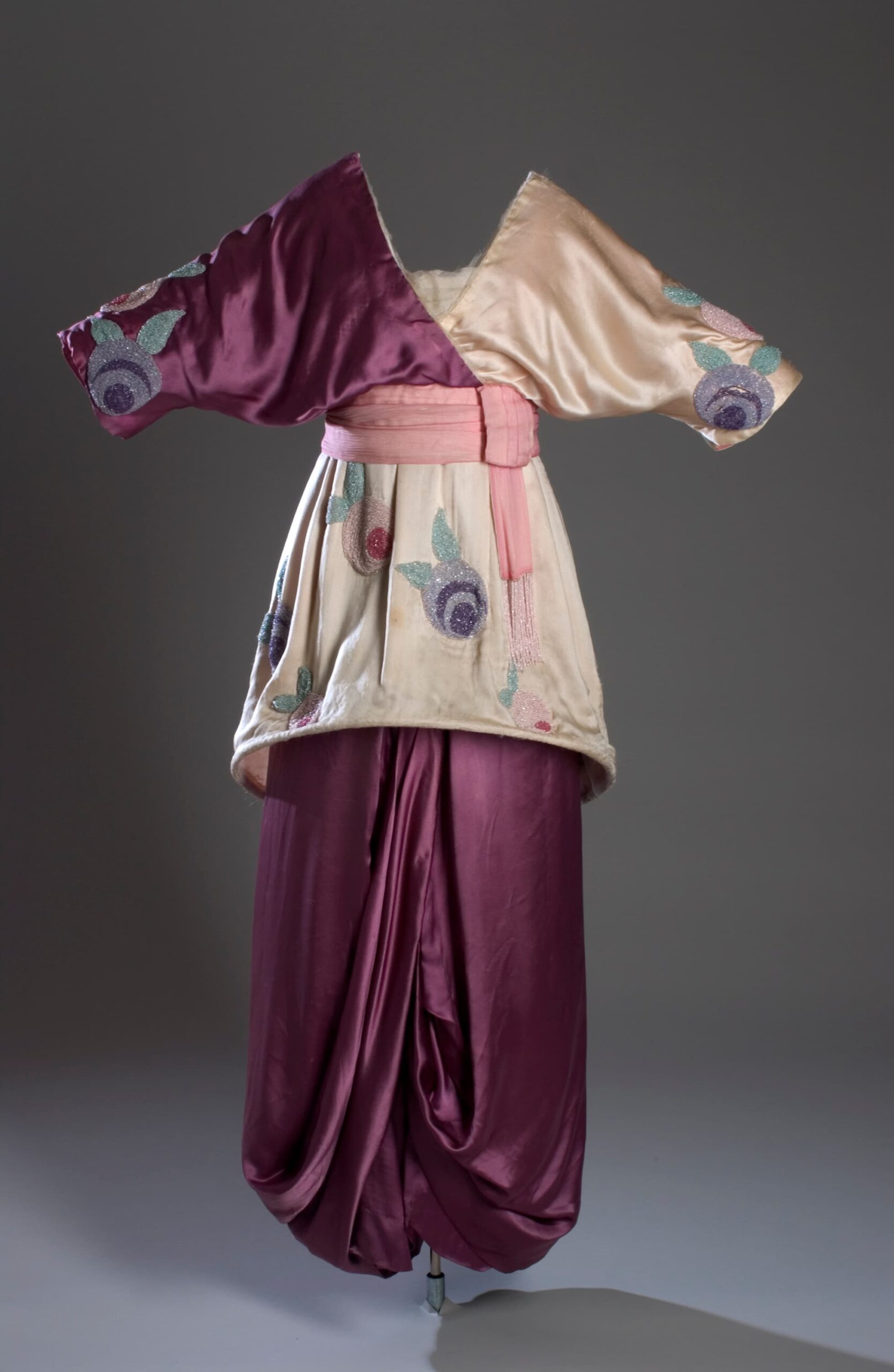
Rarest couture piece: Paul Poiret, “Sorbet” gown, 1913
This Orientalist gown, with its lampshade tunic decorated with pearl embroidery, is one of just three distinct sherbet-colored pieces Poiret created from costumes he designed for his famous 1002nd Night Party.

Most worn: Denim trousers, circa 1840
These corduroy pants, patched across the knees and thighs with denim, are a very well-worn and exceptionally rare precursor to the modern blue jean.

Most embellished: Adrian’s costume for Joan Crawford in the 1937 film The Bride Wore Red
Gilbert Adrian built his career as a costume designer at MGM, where he worked on more than 250 films. This gown was meticulously hand-beaded with an estimated 2 million seed beads.